
HMCS Sackville returns to service, carries veterans on final voyage
By Nathan Stone,
Trident Staff
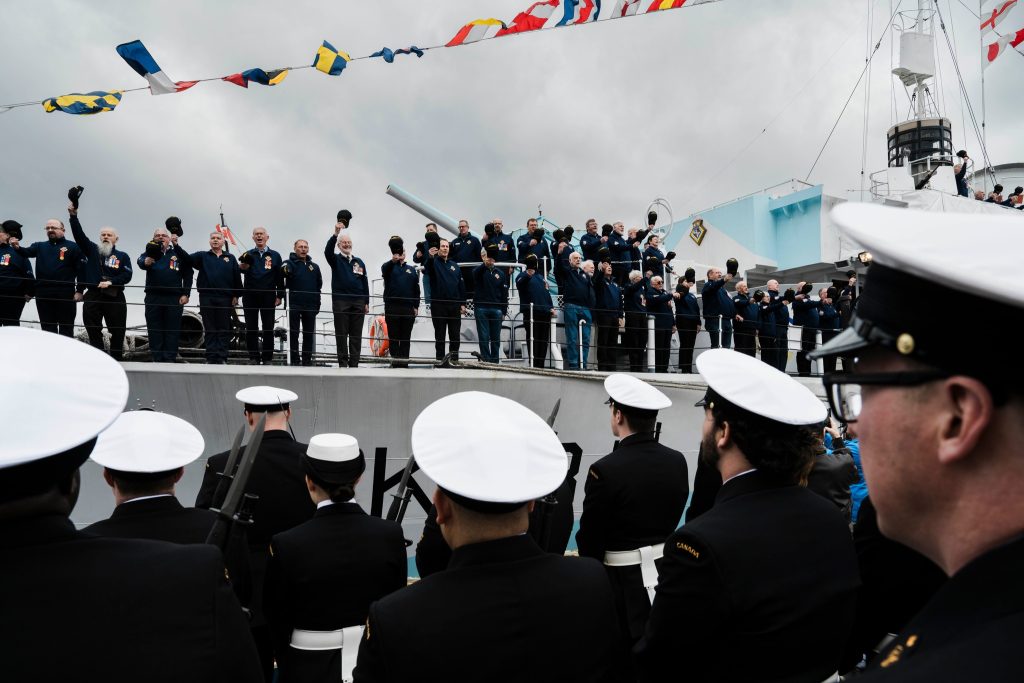
The world’s last surviving Flower-class corvette, His Majesty’s Canadian Ship (HMCS) Sackville K181, ceremonially returned to the Royal Canadian Navy (RCN) on May 15, 85 years, to the day, after it first launched.
The recommissioning marks a historic milestone for a vessel that once battled U-boats in the icy North Atlantic. It is a symbolic recognition of Sackville’s continued importance to the RCN.
“The idea is to recognize the RCN’s heritage and culture by bringing the ship back into the fold with this honorary commissioning, and to bring more emphasis to our history as a Navy,” said Chief Petty Officer Second Class (CPO2) Adam Yardy, HMCS Sackville’s current Coxswain.
Sackville serves as Canada’s Naval Memorial and as a floating museum on the Halifax waterfront. It is managed by the Canadian Naval Memorial Trust, the non-profit organization overseeing the ship since 1982.
Like HMCS Haida in Hamilton, which is also preserved as a museum and serves as the RCN’s ceremonial flagship, Sackville will continue its memorial and educational purposes. The Canadian Naval Memorial Trust (CNMT) will continue to manage the vessel.
Though the ship will continue with its regular business, CPO2 Yardy says the recommissioning will hopefully lead to a stronger link between HMCS Sackville and today’s RCN, encouraging sailors to engage with the history of their Navy.
Their last watch
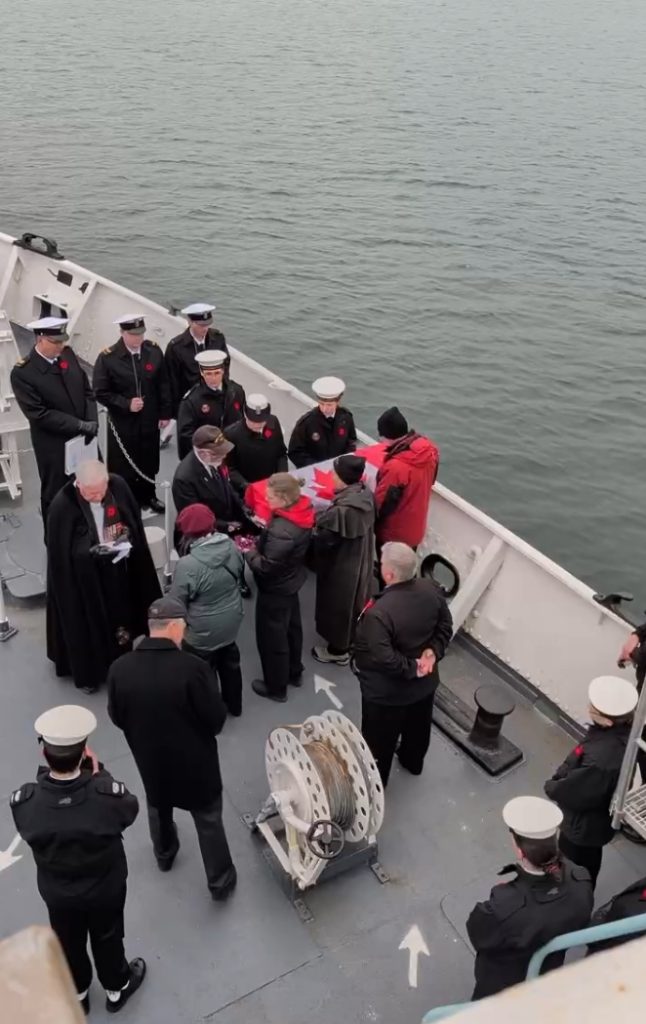
As part of its role as a naval memorial, Sackville also takes part in remembrance and memorial ceremonies, including committals of ashes at sea, as it did during this year’s Battle of the Atlantic commemorations on May 3.
CANADIAN NAVAL MEMORIAL TRUST
That morning, Sackville was towed into the waters off Point Pleasant Park, Halifax, carrying the cremated remains of 23 sailors who had requested a burial at sea.
One by one, relatives of the deceased stepped forward to place ashes onto a ceremonial board as a chaplain offered final prayers.
“The Padre will say the last prayer,” said CPO2 Yardy. “And then the side is piped out of respect for their passing. Everyone is able to salute the board as we pipe the side. We do that for each member.”
Families were also given the opportunity to read biographical tributes. For those unable to attend, CPO2 Yardy read the life stories of the deceased. Then the remains were committed to the sea.
“Being on board during those moments of remembrance, those are my favourite moments. Helping the families.” said CPO2 Yardy.
Launched on May 15, 1941, Sackville was one of 122 corvettes built in Canadian shipyards during the Second World War. The ships were tasked with protecting convoys of food, fuel, and munitions travelling across the Atlantic to the United Kingdom.
The ship’s most memorable engagement came in August 1942, when it engaged three U-boats in 24 hours, putting two out of action. Severely damaged by a torpedo near-miss in September 1943, it was converted to a training vessel and later served as a civilian oceanographic research ship.
Paid off in 1982, it was purchased by the Naval Trust the following year and restored to its 1944 configuration. In 1985, Sackville was designated Canada’s Naval Memorial to honour Canadian sailors lost at sea and all those who’ve served in the RCN.