
Foundry training helps keeps rare RCN machinist trade alive
By Nathan Stone,
Trident Staff
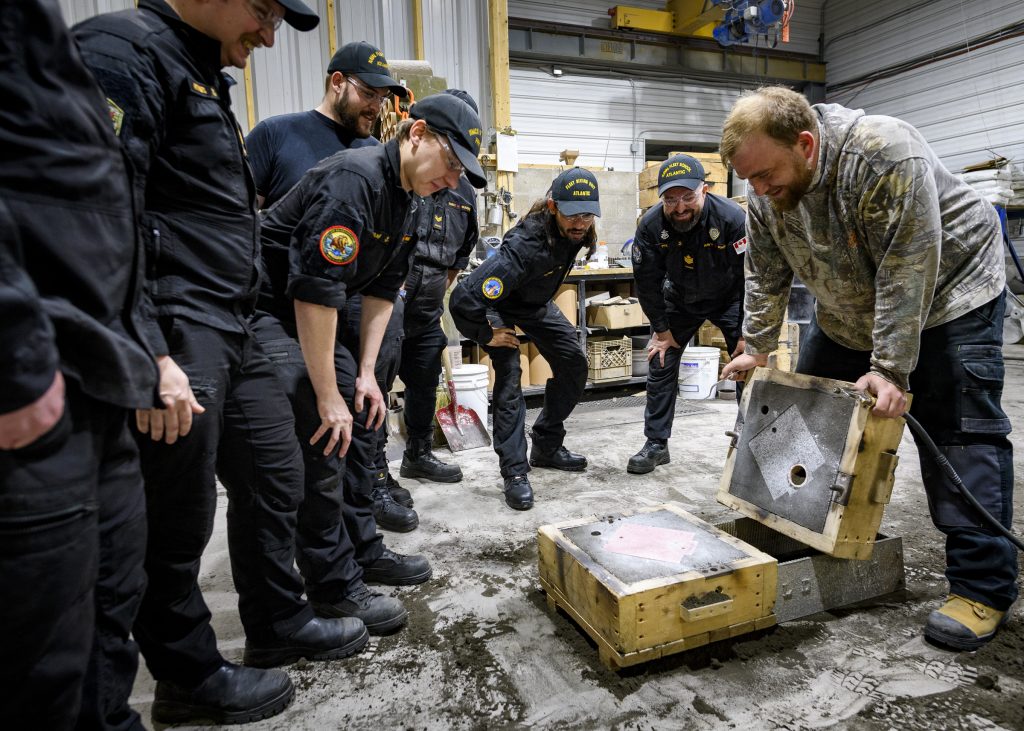
Inside the historic Lunenburg Foundry, aspiring Royal Canadian Navy (RCN) Machinist Specialists spent two days casting machine parts from molten metal. With its bright flashes of molten metal and tangible results, the trip gave students a hands-on stake in preserving a rare skill that the Navy can’t afford to lose.
Machinist Specialists maintain, repair and fabricate mechanical parts for RCN ships while at sea.
During their trip to Lunenburg from May 5-6, a dozen students from Naval Fleet School (Atlantic) (NFS(A)) cast five aluminum parts and two red brass components at the foundry, transforming raw metal into the rough beginnings of a new drill press and a gear pump.
“This is the highlight of this course for them,” says Petty Officer Second Class (PO2) Desmond Pye, one of the small number of navy Machinist Specialist instructors. “They were absolutely blown away by how interesting it was.”
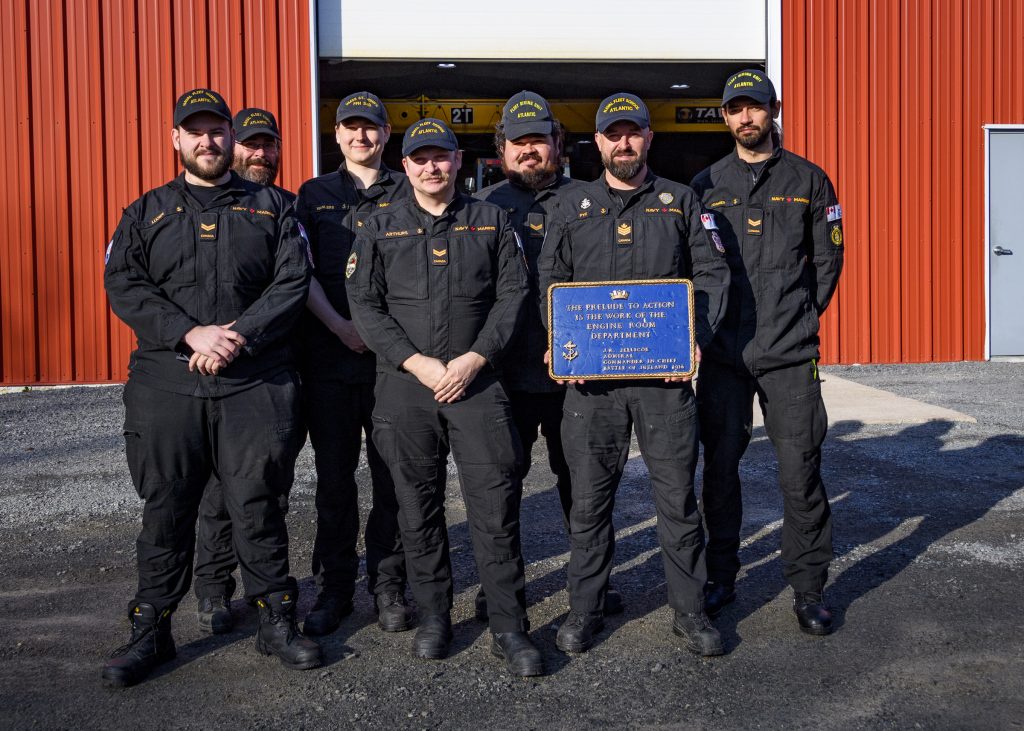
That interest is something he tries to promote in his students, as the RCN has a shortage of machinists. PO2 Pye counts just 14 Machinist Specialists within Maritime Fleet Atlantic. That’s the total pool to draw from for instructor positions, deployments, and any task that requires their unique expertise.
Machinist Specialists are vital aboard RCN ships. When a piece of equipment breaks at sea and no replacements are on hand, the fallback is the ship’s company and whatever skills they bring.
PO2 Pye has experienced this firsthand. In the fall of 2023, aboard His Majesty’s Canadian Ship Montréal off the coast of Florida, one of the ship’s two desalination plants failed due to a broken rod. Without the ability to make fresh water, the crew would need to postpone the mission and spend a week in port waiting for a replacement part.
“The chief engineer at the time knew about my machining ability,” PO2 Pye recalls. “He spoke up and said, ‘I have a machinist that can make this part.’”
Others covered his watch so he could work through the night. By morning, the new rod was made and installed.
It’s his hope that students develop that same hands-on confidence early, starting with the training course. The parts students cast at the Lunenburg foundry are the foundation of two fully operational machines: a drill press and a gear pump. Once the rough castings cool, students bring them back to the machine shop at NFS(A) where they’ll bore, thread, and mill them into working equipment.
“The gear pump that the guys manufacture here is capable of pumping a 45-gallon bucket of water down in about 30 seconds,” says PO2 Pye. “They’re not just making a stud and a nut. They’re making an operational product.”
The course typically graduates three to six qualified machinists from a class of twelve. The trade demands patience, precision, and a strong attention to detail, and students must be willing to invest significant time developing those skills. The most successful candidates are often those who discover a genuine interest in machining and embrace the challenge of mastering the craft.
PO2 Pye said he’d like to see students get more hands-on time with lathes and mills, similar to the three-and-a-half months he spent training compared to the four weeks students get today. That extra time, he believes, is what helps students develop the skills and passion required for a career unlike any other in the RCN. As he sees it, a Machinist Specialist can be the ship’s last line of defense against operational failure.
“I’ve had captains and everybody down in the machine shop watching me on the machines at different parts of my career,” says PO2 Pye.
“Warships are meant to move, fight, float. Engineers take care of two or three of those aspects. Having a Machinist Specialist on the ship extends your capabilities of keeping the ship at sea for longer, with the maximum amount of machinery that you need.”
Currently, PO2 Pye and his colleagues rotate through instructor positions, teaching courses and hoping to spark interest in one of the RCN’s most unique trades.