
SUBMITTED
Sailing into recovery: Warrior Sailing Canada brings camaraderie to injured veterans
By Nathan Stone,
Trident Staff
SUBMITTED
For three days in June, the waters of The Northwest Arm became a place of healing, teamwork, and new beginnings.
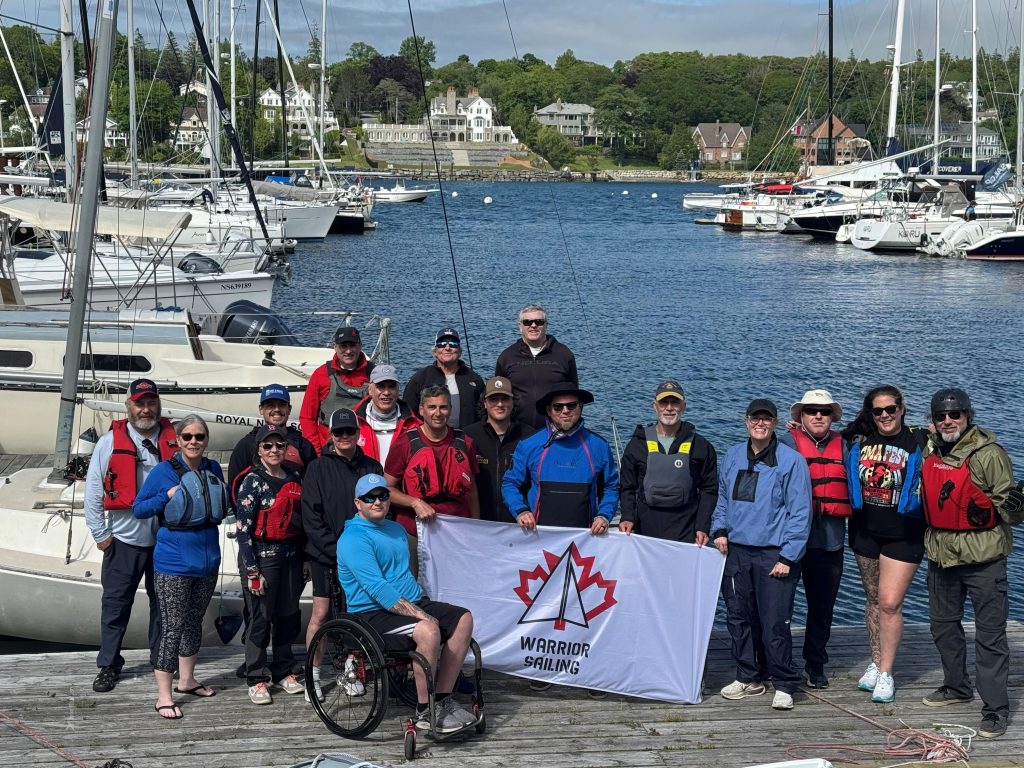
From June 16-18, a dozen Canadian Armed Forces (CAF) members and veterans gathered at the Royal Nova Scotia Yacht Squadron for the Warrior Sailing Canada training camp.
The program, run in collaboration with the True Patriot Love Foundation, uses sailing as a tool for recovery, rehabilitation and reintegration for active and retired CAF members who have suffered injuries while serving.
The hope is participants learn how to sail while rediscovering a sense of camaraderie.
Co-founder Kari MacKay and her husband Dave launched the first Canadian camp in 2017, after Dave’s experience coaching with the original Warrior Sailing Program in the United States convinced them Canada needed one of its own. Since then, the program has expanded to include camps in Ontario, British Columbia, and now its fourth event in Halifax.
The camp’s daily structure balances classroom learning with hands-on practice on the water.
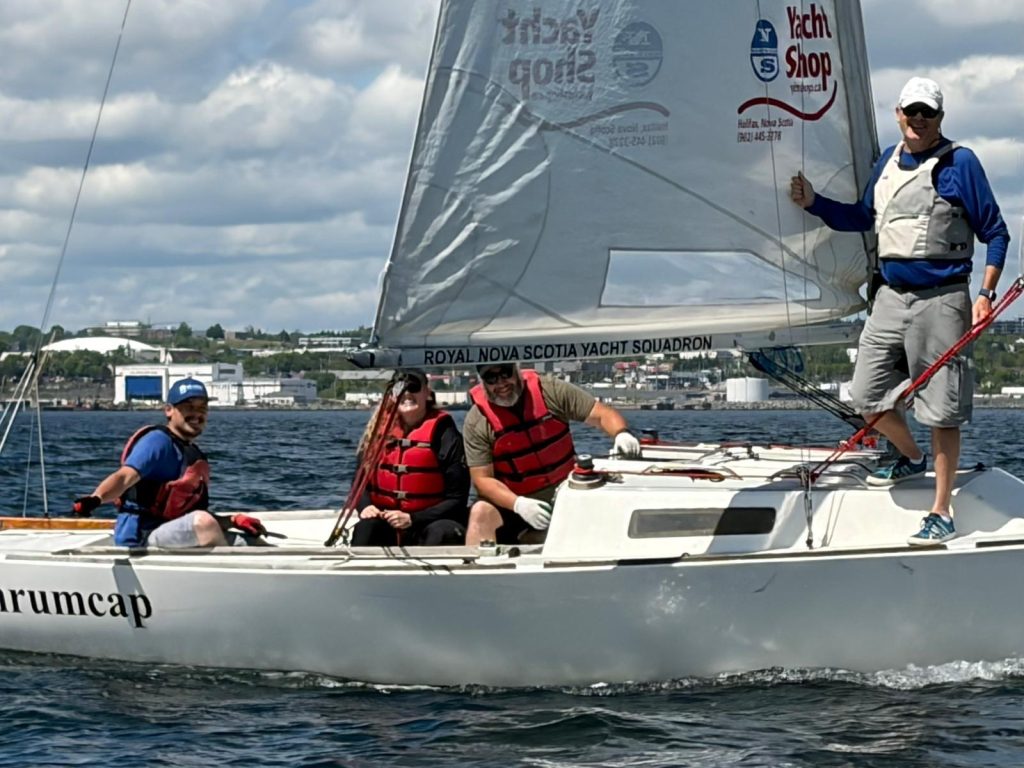
Each boat carries three participants and one coach. The small crew size ensures everyone plays an active role. Participants rotate through the positions of jib, main, and tiller.
The focus on teamwork can resonate deeply with veterans.
Brent Beshara, a retired Petty Officer, 2nd Class who served 24 years in the Royal Canadian Navy, initially thought sailing was “witchcraft,” having spent his entire career on powerboats.
He said the team dynamic on the boat brought him right back to his days in uniform.
“That boat’s not going to move unless we’re working as a unit. It’s the same as the military; nothing works if we don’t work together.”
Grace Shears was a private in the army before an injury ended her career in 1992.
She traveled from her home in Newfoundland, where she runs a veteran support group, to attend the camp.
For her, socializing with her fellow veterans became a highlight.
“The networking is incredible… We connect with all these different veterans, we gather more resources that we can share in a ripple effect.”
She said the shared backgrounds of the participants quickly erase any sense of hierarchy.
The program also accommodates participants with physical injuries, with adaptive equipment provided to ensure everyone can take part.
Aaron Matheson, a former Sailor 3rd Class, hadn’t been on the water since an accident led to him using a wheelchair.
He described the experience as a “blast.”
He found that manning the “main” position on the sailboat, adjusting the main sail to best capture the wind, offered the stability he needed for his mobility challenges.
He also praised the quality of the instructors, which included world-class sailors and Olympic medalists.
“Everyone’s super kind, super knowledgeable and they bring a really cool method of instruction,” he said.
For MacKay, the moments of connection between participants are what makes the program effective.
She recalled a story from the program’s early days when a veteran left her husband Dave a note on a hotel cocktail napkin.
“It read: ‘You’ve changed my life. I haven’t left my basement in three years, and now sailing will be a part of my life.'”
“That’s why you do it,” she said.
Along with sponsorship from True Patriot Love, Royal Nova Scotia Yacht Squadron lent its boats, coaches, and facilities free of charge.
MacKay said each of the Warrior Sailing Camps takes a maximum of 18 participants per camp, allowing for meaningful connections while keeping things manageable.
Many participants expressed plans to keep sailing after the camp.
Beshara said he looks forward to joining local sailing events back home in Newfoundland, while Shears, who has friends with sailboats, wants to become “more of an asset than a liability” on the water.
For MacKay, inspiring that kind of attitude is the goal.
The purpose, she said, “is to create community and give our veterans an opportunity to connect with a different family, stay in touch, find new recreation, and a new way to get out.”