

CPL CONOR MUNN
How the RCN is preparing to fight drones
By RCN
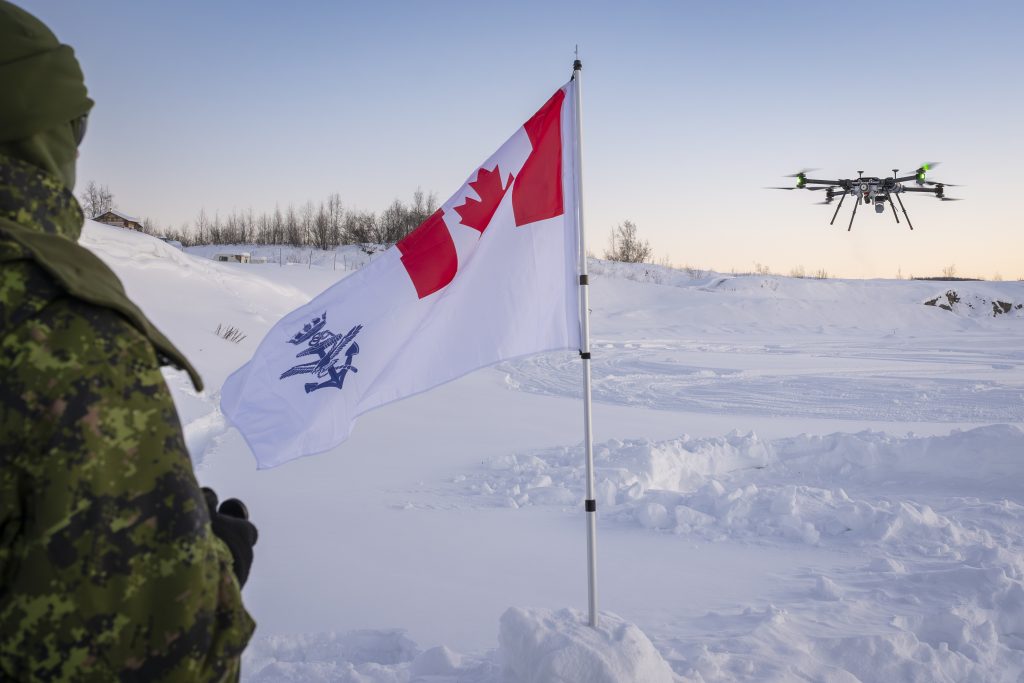
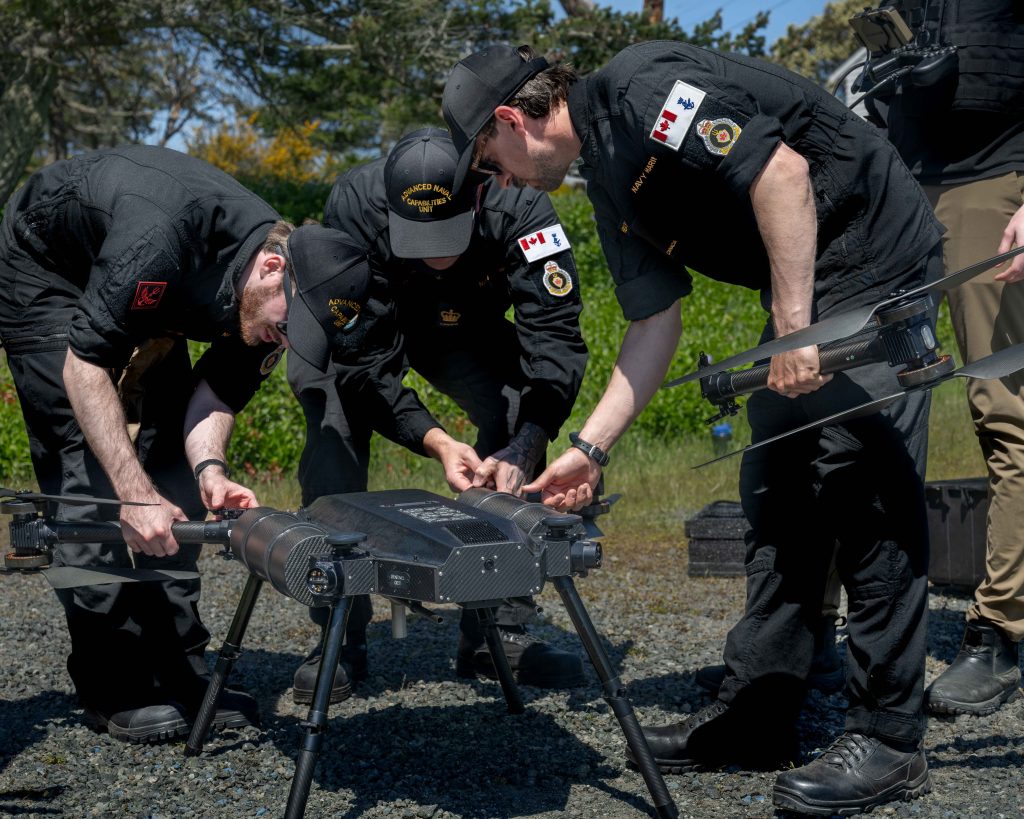
Once viewed as a nuisance on the battlefield, drones have evolved into a significant operational challenge in modern warfare. Their widespread use has forced militaries to adapt how they fight, challenging assumptions about the role and survivability of large, expensive platforms.
At sea, the growing use of uncrewed systems is reshaping the threat environment. Recent conflicts have shown how relatively inexpensive technologies can damage high-value assets, disrupt operations and drive changes in naval tactics and force protection.
“Quite simply, it’s evolved very rapidly,” said Commander (Cdr) Phillip Durand, one of the Royal Canadian Navy’s (RCN) experts in maritime counter-drone operations.
He points to the 2020 conflict between Azerbaijan and Armenia as a turning point in how the world viewed the threat posed by drones.
“Azerbaijan employed a mix of armed drones, loitering munitions and remotely piloted explosive aircraft,” Cdr Durand noted. “They overwhelmed Armenian air defences, giving Azerbaijan control of the airspace. What had been a longstanding stalemate shifted decisively in about a month.”
“That moment marked drones as a true game‑changer in modern warfare.”
Russia’s invasion of Ukraine reinforced that lesson, demonstrating how inexpensive drones could challenge much larger conventional forces both on land and at sea.
“We anticipated this evolution would extend to the sea, and it has,” he added. “We’ve seen surface drones used very effectively, particularly by Ukraine, and the rapid emergence of undersea uncrewed systems as well.”
In 2024, Ukraine used an explosive uncrewed surface vessel to sink a Russian corvette, illustrating the growing impact of uncrewed maritime systems on naval warfare.
Such developments highlight how rapidly the threat environment continues to evolve.
“Even the observations I share today may be outdated within weeks because the technology is evolving so quickly,” Cdr Durand stressed.
For the RCN, adapting to this threat means rethinking how it detects, deters and responds to uncrewed systems operating above, on and below the sea.
Why drones are difficult to counte
Drones present challenges that are significantly different from traditional threats. Unlike conventional aircraft or missiles, they can be launched in large numbers at a fraction of the cost.
Their small size makes them difficult to detect, while their ability to operate in swarms can overwhelm traditional defence systems.
“We’re used to tracking and engaging large, metallic military platforms,” he explained. “Drones are often small, made of plastic, foam, or cardboard, and easily expendable.”
The operating environment becomes even more complicated in Canadian waters as distinguishing between routine activity and a genuine threat requires a careful combination of technology, training and judgment.
CPL MORGAN LEBLANC
How Canada’s Navy is adapting
The RCN is strengthening its approach to countering drones by building on existing capabilities rather than relying on a single solution.
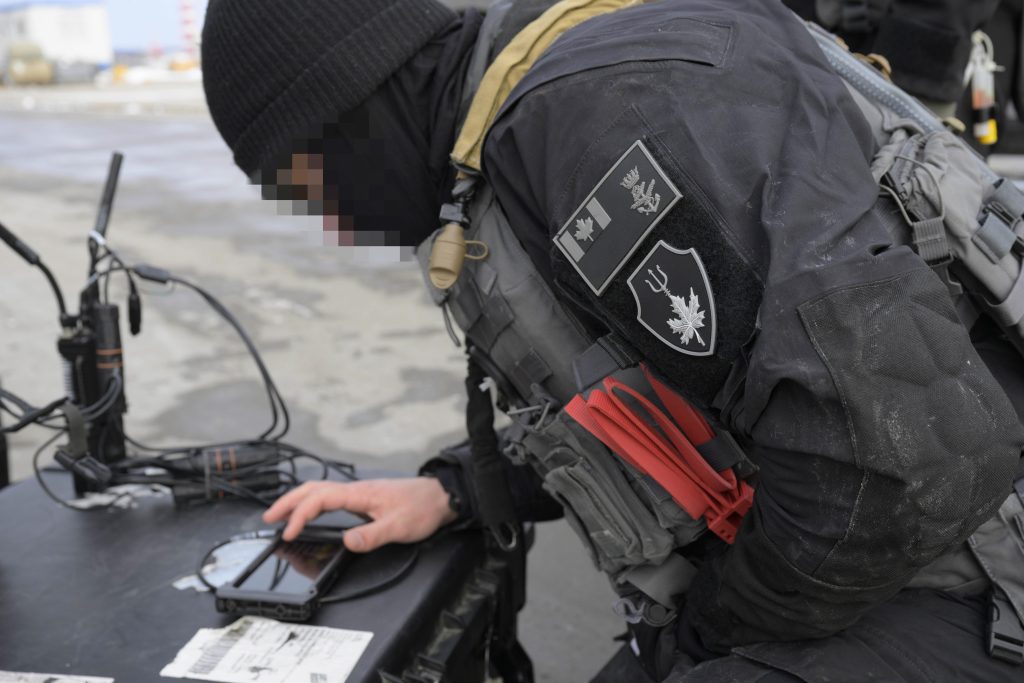
The Navy’s approach combines sensors, electronic warfare systems, force protection measures, training and emerging technologies into a layered defence designed to respond to a wide range of threats. This layered approach allows the Navy to respond to a wide range of scenarios while maintaining readiness against more traditional threats.
However, keeping pace with technological change remains a constant challenge.
New ideas must be tested and refined, but their true value is only realized when they become deployable capabilities available to the Fleet.
For Cdr Durand, bridging the gap between experimentation and implementation is one of the Navy’s most important challenges. While iteration and innovation remain essential, he argues that success is not measured by the number of prototypes developed, but by the capabilities ultimately delivered to sailors.
“We often produce impressive prototypes, but without a pathway to procurement. If we can’t buy the system, field it and put it in sailors’ hands, then we haven’t created real capability.”
As technology continues to evolve, the Navy’s challenge will be ensuring that promising ideas make the journey from concept to capability.
Preparing for tomorrow’s battlespace
Looking ahead, Cdr Durand expects uncrewed systems to become even more prevalent.
“We foresee, in the next few years, the operational battlespace to be saturated with uncrewed systems, from air, surface and subsurface.”
Preparing for that future requires more than new technology alone.
The RCN is adapting how it trains, plans, and operates to account for the growing role of uncrewed systems across the maritime domain.
“Our training now treats uncrewed systems as just another threat type, alongside aircraft, missiles, or surface contacts,” Cdr Durand explained. “Sailors learn how to recognize, classify, and respond appropriately.”
Meeting this challenge also depends on collaboration.
The RCN works closely with partners across Canada and internationally, including organizations such as the RCMP, Transport Canada and allies across NATO to share expertise and develop solutions.
The Government of Canada recently launched the Defence Drone Initiative (DDI), a new program that will accelerate the development, testing and production of Canadian uncrewed and autonomous systems. By connecting operational requirements with Canadian innovation and industry expertise, the initiative aims to help deliver the next generation of capabilities to the CAF and Canadian Coast Guard more quickly.
These efforts are helping shape how Canada and its allies approach the challenge.
“We understand this threat deeply, and we’re helping define how it will be addressed internationally. The next step is translating strategy and concepts into fielded capability, so our sailors remain at the cutting edge,” he concluded.
As drones continue to transform battlespace, the RCN’s focus remains clear: ensuring sailors have the tools, training and capabilities they need to operate safely and effectively in an increasingly complex threat environment.