

HMCS St. John’s tests RCN’s on-board blood supply program
By Captain Matt Rowe ,
HMCS St. John’s
A new Royal Canadian Navy (RCN) initiative is transforming how ships prepare for medical emergencies at sea, and HMCS St. John’s is helping to determine its feasibility.
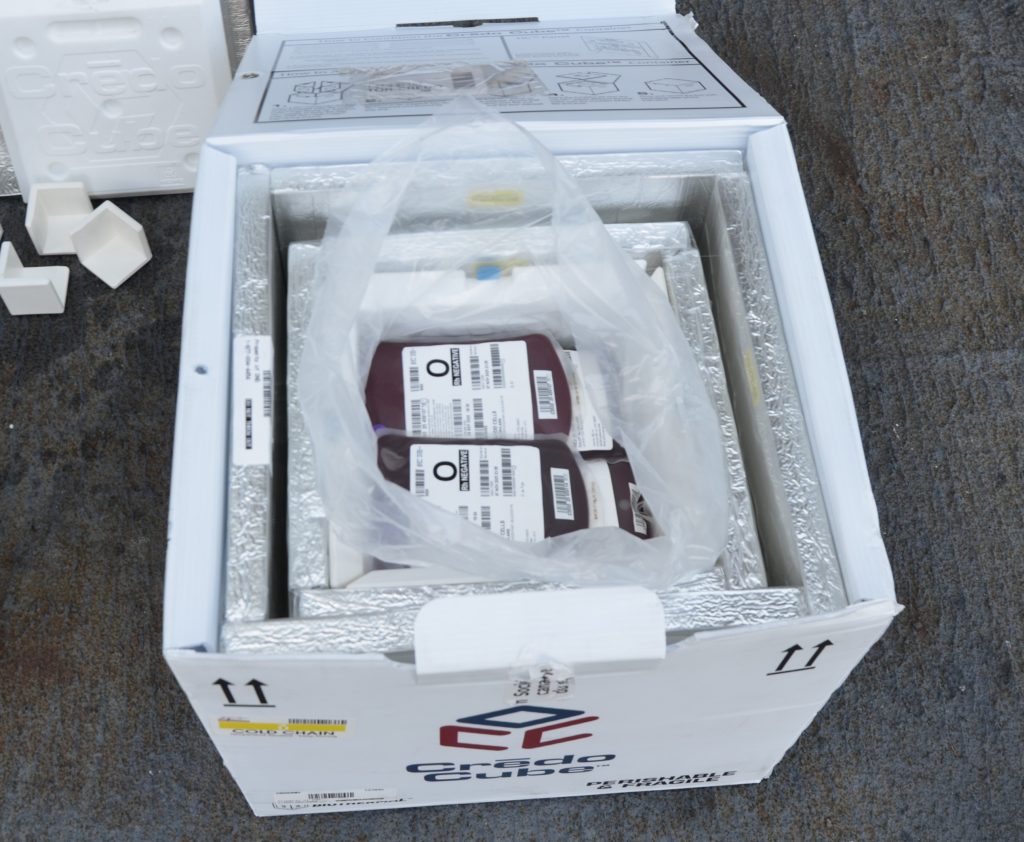
Select RCN vessels now sail with a supply of packed red blood cells in their sick bays. This capability has been normal practice on Army deployments, but was only introduced for naval operations in late 2023. The aim is to dramatically improve a ship’s ability to treat severe injuries when higher-level medical care may be hours, or even days, away.
“For me, the real story is that we are making strides towards improvement of pre-hospital care in the RCN,” explains Lieutenant-Commander (LCdr) Sabrina Dzafovic, the Medical Officer (MO) on HMCS St. John’s. This includes enhanced first aid training for all sailors (Maritime Combat First Aid), the pending introduction of a maritime version of Tactical Combat Casualty Care, improved medical team pre-deployment training, and updated protocols for casualty evacuation by air. Together, these advances aim to “improve our ability to deal with acute injuries and trauma aboard the ship.”
Massive hemorrhage remains the leading cause of preventable death in both combat and major trauma. While fluids like saline can restore volume, they cannot support clotting or carry oxygen the same way blood does. “Nothing actually is as good as blood and blood products,” the MO notes.
Because naval deployments can last six months or more, the Navy is also refining its global resupply chain. During HMCS St. John’s recent Rest and Maintenance Period (RAMP) in France, the ship successfully received a shipment flown from Canada and picked up at the Nice Côte d’Azur Airport. Temperature monitors confirmed the supply remained viable, thereby proving the capability of delivery to Mediterranean Operations.
A key partner in this capability is Canadian Blood Services (CBS). CBS is responsible for the safety, collection, and storage of all blood and blood products in Canada. As LCdr Dzafovic explains, “They are the ones that monitor the safety of blood and blood products in Canada, collect it and store it… They also ensure that we’re following all of the proper guidelines.”
CBS works closely with the Health Services office in Ottawa to ensure transport standards are met, to guide training based on the Bloody Easy transfusion safety publication, and to support future developments such as a shipboard “walking blood bank” volunteer donor system.
The motivation behind the program is forward-looking. “We’re looking at a different reality of combat in our next theater of operations,” LCdr Dzafovic says. By carrying blood at sea and securing the partnerships needed to sustain it, the RCN is strengthening its ability to save lives in combat, during accidents, or when operating far from reliable medical care.