
PO2 EDUARDO JORGE
FDU(A) upgrades to new advanced electronic rebreather system
By Nathan Stone,
Trident Staff
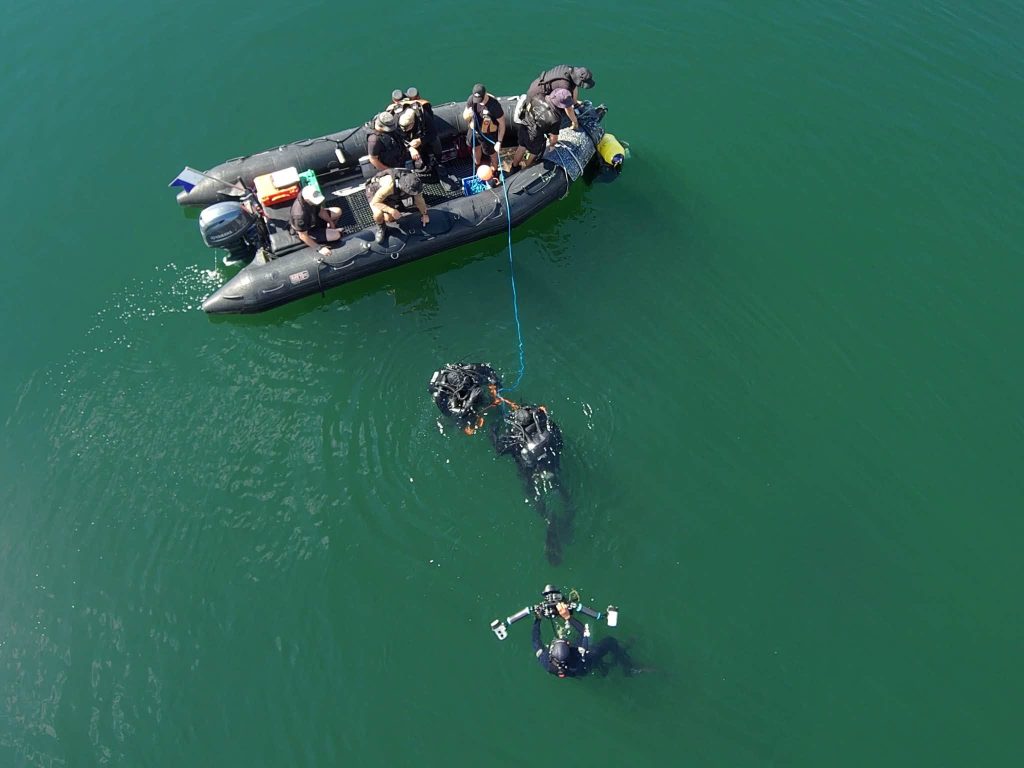
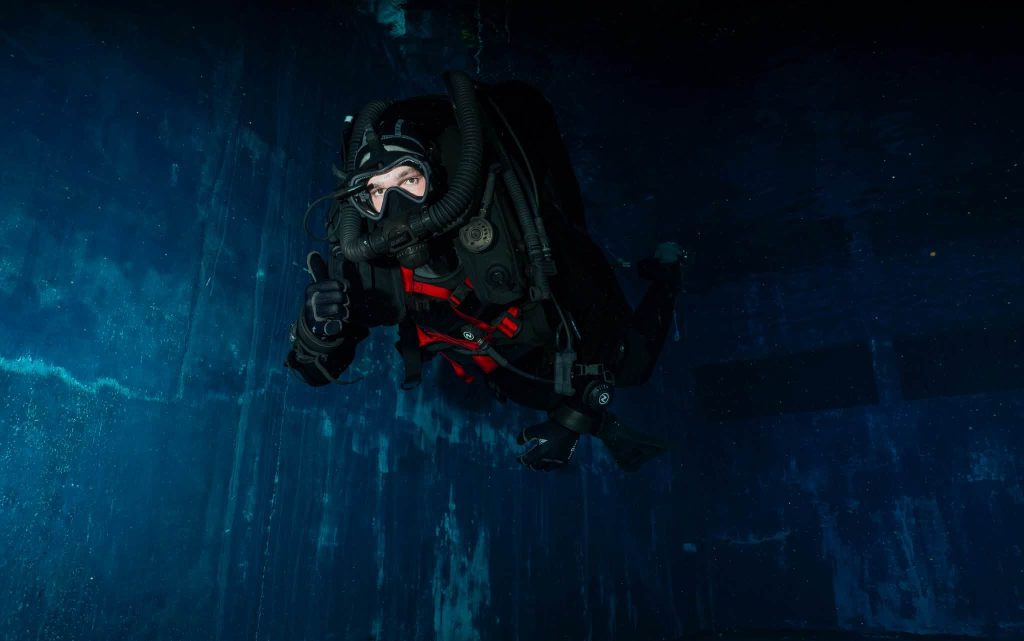
The Royal Canadian Navy’s (RCN) clearance divers are getting in the water faster and staying underwater longer thanks to a new high-tech rebreather system.
Fleet Diving Unit (Atlantic) (FDU(A)) recently completed mine-countermeasures training with the Avon Protection MCM100, a state-of-the-art military rebreather designed to enhance safety and performance during dives.
The new equipment, developed by the UK Defence Science and Technology Laboratory and the Royal Norwegian Navy, replaces the unit’s stock of legacy rebreathers. It marks a significant shift from mechanically controlled systems to a fully electronic one.
Sailor 1st Class (S1) Mike Butt, a Clearance Diver Technician at FDU(A), said the upgrade represents a generational leap in capability.
“Comparatively to our older sets, it definitely feels like going from driving a 2004 Corolla to driving a Lamborghini,” said S1 Butt. “The amount of brain power inside of it to sustain your life underwater is absolutely jaw dropping.”
Unlike previous models that require manual gas mixture settings and pre-planned dive tables, the MCM100 features onboard computing that automatically calculates the optimal breathing mix in real time. This automation allows divers to focus more on the mission and less on managing their equipment.
The system supports the wide range of tasks undertaken by the RCN’s clearance divers, including explosive ordnance disposal, mine countermeasures and other special operations. It can operate in both shallow and deep-water environments, extending mission length and allowing for safer, more complex dives.
S1 Butt said the RCN’s other divers, including Port Inspection Divers and Ship’s Team Divers, won’t necessarily be replacing their existing systems. The training required to use the MCM100 is unique to clearance divers at this point.
The MCM100 includes advanced monitoring and automated safety features designed to give divers confidence in their life-support equipment. S1 Butt noted that the system also requires significantly less maintenance and preparation time.
“With the old generation, you’re looking at about 45 minutes to an hour of build-up and prep,” he said. “Now you’re looking at anywhere from 10 to 15 minutes before you’re able to put it on your back and get in the water.”
The adoption of the new gear also strengthens Canada’s interoperability with key allies. The equipment is currently in use by several NATO nations, including the United Kingdom, Germany and Norway. By employing the same technology, RCN clearance divers can integrate more effectively into multinational operations.
“There’s a lot of nations in NATO and outside NATO that we work with,” said S1 Butt. “Because we have the same set, we can work more effectively together.”