
LE CPL GRGEORY COLE
New programs, initiatives highlighted to mark IDPWD
Par Nathan Stone,
L’équipe du Trident
LE CPL GRGEORY COLE
From service dogs to online support networks, a range of initiatives aimed at improving accessibility for employees with disabilities were discussed at Canadian Forces Base (CFB) Halifax last month.
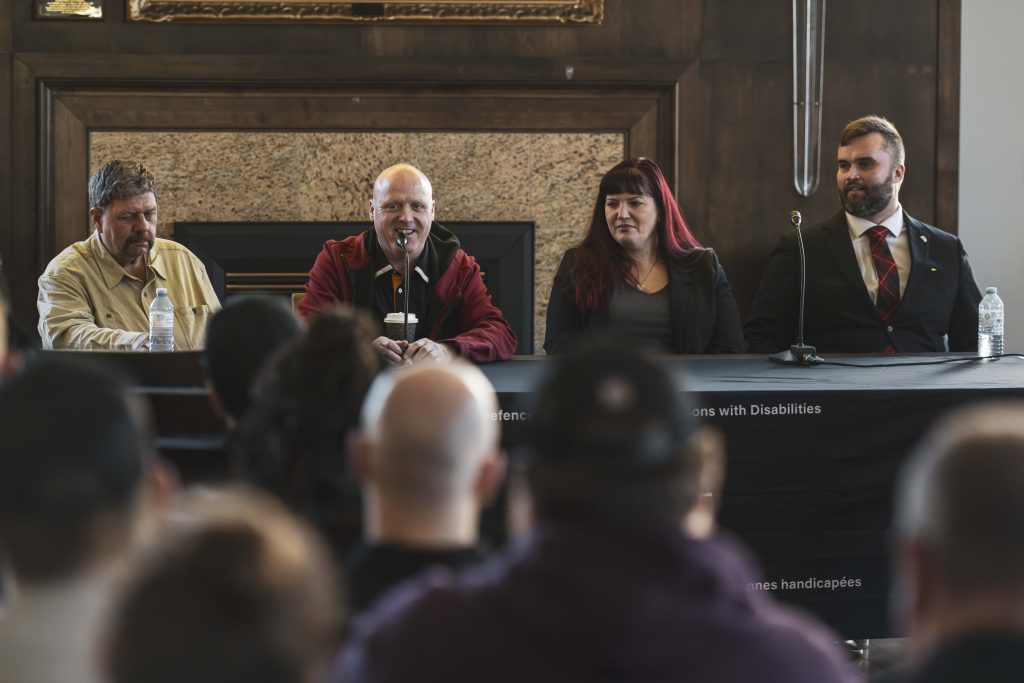
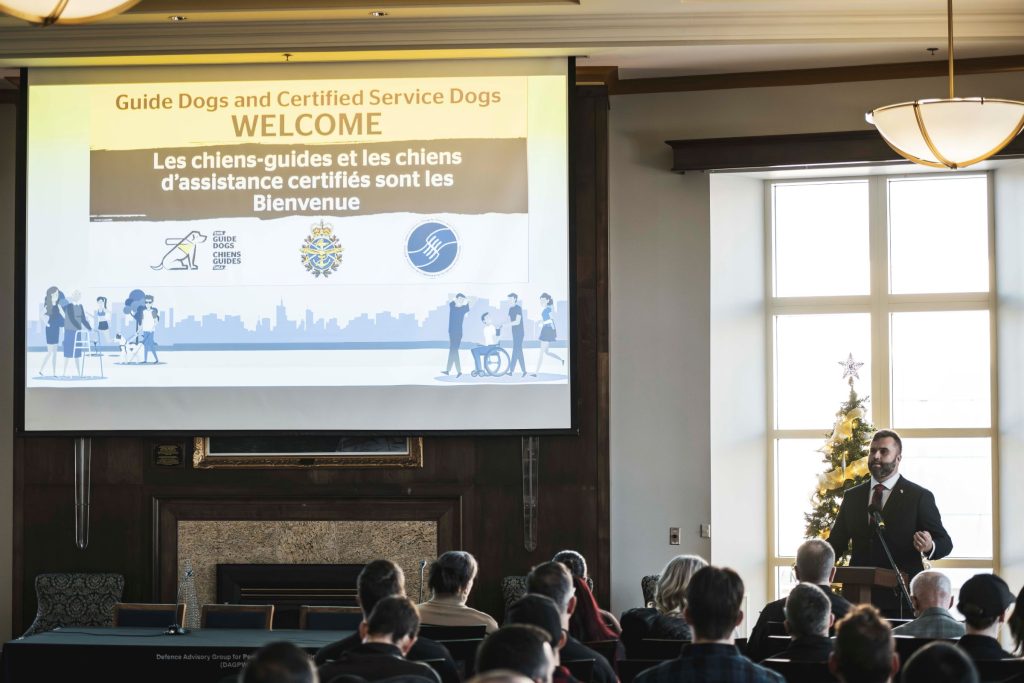
In recognition of the International Day of Persons with Disabilities (IDPWD), a panel discussion was held at Juno Tower on December 12 to share updates and perspectives on accessibility and inclusion within the Defence Team.
Hosted by the local Defence Advisory Group for Persons with Disabilities (DAGPWD), the discussion featured Defence Team members alongside community partners and advocates.
DAGPWD Military Co-chair Sailor 1st Class (S1) Stephen Happe highlighted a forthcoming initiative that will use signage to clearly identify which base buildings are service dog and guide dog friendly.
To date, rules surrounding service dogs at CFB Halifax have caused confusion and, in some cases, unintentional discrimination toward employees who rely on the animals, noted S1 Happe.
DAGPWD expects the new signage program to launch within the next few months. CFB Halifax is acting as the pilot site for the initiative.
“It is our intention to bring this initiative national, and hopefully, within a year or two, we’re going to start to see these signs permanently placed across all the bases in the country,” S1 Happe said.
Glen Smith, of Fleet Maintenance Facility Cape Scott Safety and Environment, shared information on the Government of Canada Workplace Accessibility Passport, a national program now available to all Defence Team members with disabilities.
The passport allows employees to document barriers related to their disability and work with supervisors to identify individually tailored solutions.
“Employees know their barriers best, and their voice is central in finding the solutions,” said Smith.
He noted that the passport represents a shift in how accommodations are approached.
“Instead of focusing on medical documentation, the passport embraces the social model of disability, which means we look at the environment and the systems, not the person and their limitations, as the source of the barrier.” The program also allows accommodations to follow employees between positions, something Smith said had been a challenge in the past.
Another online support tool highlighted was the Infinity Network, a platform designed for neurodivergent federal employees to connect and share solutions to workplace barriers.
There are 90 federal institutions represented in the Infinity Network, including the Canadian Armed Forces. S1 Matthew Raniowski said the network has already grown into a large and supportive community.
“It’s just a few years old, but it’s the largest neurodivergent community of government employees in the G7.”
He added that the network hosts frequent social events, both virtual and in person, and makes it easy for members to connect with one another.
The panel discussion also featured several Defence Team members sharing personal experiences of living and working with disabilities, along with a question-and-answer session with DAGPWD representatives.